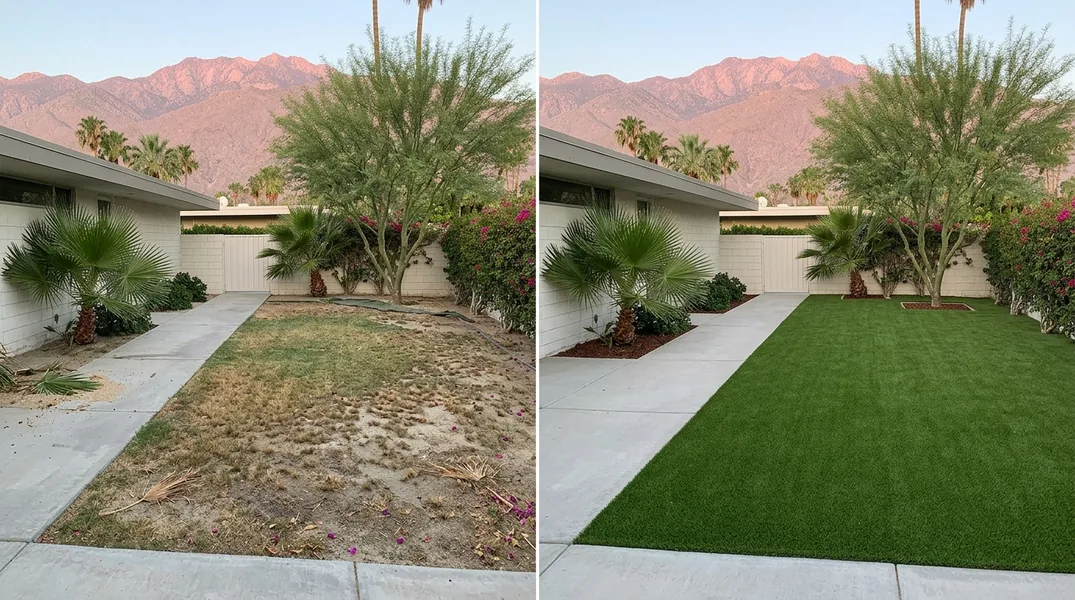
Why Drainage and Base Prep Matter in Palm Springs Sand
Installing artificial grass in Palm Springs presents a unique challenge that many homeowners underestimate. The region's naturally sandy, fast-draining soil can seem like an advantage at first, but without proper planning, it becomes a liability. Sand shifts, compacts unevenly, and offers minimal structural support for your new turf system. This is why the foundation you build before laying a single blade of artificial grass determines whether your investment thrives for a decade or fails within a few years.
The stakes are especially high in the desert climate. When summer temperatures soar and occasional heavy rains arrive, your turf's performance depends entirely on what lies beneath it. Poor drainage can trap moisture in pockets, creating soft spots and accelerating wear. Inadequate base preparation allows the sand to settle and shift, causing your turf to wrinkle, buckle, or develop uneven surfaces. Understanding these challenges and addressing them properly is the difference between a beautiful, durable lawn and a costly mistake. That's why Residential Artificial Grass Installation in Palm Springs requires specialized knowledge of local soil conditions.
Understanding Artificial Grass Drainage Systems
Proper artificial grass drainage isn't just about water running through the turf face. It's a complete system that manages water at three levels: surface drainage, subsurface movement, and base layer percolation. On the surface, your artificial grass should shed water quickly, directing it away from low spots. Beneath the turf, a well-designed drainage layer prevents water from pooling and allows moisture to flow laterally toward drainage outlets. At the base, the foundation materials must allow water to percolate downward without trapping it in the sand below.
In Palm Springs, where the water table is deep and the soil is naturally porous, the real challenge is preventing water from moving too quickly in some areas and too slowly in others. This is why a sloped base is essential. A gentle grade of at least 1 percent ensures that water flows consistently across your lawn rather than creating dead zones where moisture accumulates. Without slope, even premium drainage materials can't prevent soft spots from developing. The combination of proper slope, quality artificial grass drainage materials, and appropriate underlay creates a balanced system that protects your investment for years to come.
What to Put Under Artificial Grass: Materials That Work
Choosing what to put under artificial grass is one of the most important decisions in your installation. The materials you select form the backbone of your turf system's longevity and performance. In Palm Springs' sandy environment, the standard approach uses a layered system that stabilizes the soil, improves drainage, and provides a firm, level surface. The foundation typically begins with native soil preparation, followed by a compacted base layer, then a specialized artificial grass underlay.
The first layer should consist of a compacted sand and rock mixture, typically 4 to 6 inches thick, that provides stability and prevents the shifting that occurs in pure sand. This layer must be graded and compacted properly to create that essential slope for drainage. Many installers use a mix of crushed limestone or recycled asphalt, which compacts more effectively than sand alone and provides better long-term stability. Above this, an artificial grass underlay serves multiple purposes: it cushions the turf for comfort and safety, further improves drainage, and prevents the base from migrating up into the turf fibers. Quality underlays designed for desert climates are engineered to withstand temperature extremes and maintain their structure through years of use. The artificial grass underlay you choose should have a minimum density rating appropriate for residential use, typically around 8 to 10 ounces per square yard, and should be specifically designed to work with artificial turf systems.
Turf Base Prep: Step-by-Step for Palm Springs Conditions
Turf base prep begins long before you order your artificial grass. The first step is removing existing vegetation and debris, then assessing the current soil composition and drainage patterns. In Palm Springs, this means identifying any compacted areas, low spots, or sections where water naturally collects. Many homeowners are surprised to learn that their yard's existing contours can trap water or create uneven surfaces that become problematic after installation. A professional assessment reveals these issues early, when they're easiest and most cost-effective to address.
Once the site is cleared and assessed, the real work begins. Excavation to the proper depth ensures you have room for all necessary layers. The subgrade, or native soil layer, should be loosened and any large rocks or debris removed. Then comes the compacted base layer, which must be installed in lifts of 2 to 3 inches, with each lift thoroughly compacted using proper equipment. This isn't a step you can rush or skip. Inadequate compaction is one of the most common reasons artificial grass installations fail. The base must be firm enough that you can't easily push your foot into it, yet still allow water to permeate. After compaction, the site is graded to ensure proper slope in all directions, directing water toward designated drainage areas. Finally, the artificial grass underlay is installed, creating a smooth, cushioned surface ready for turf installation. This entire process requires experience and attention to detail that separates professional installations from DIY attempts.
Common Drainage Problems and How to Avoid Them
One of the most frequent issues we see in Palm Springs yards is inadequate slope combined with poor material selection. Homeowners sometimes attempt to save money by using inferior base materials or skipping proper compaction, only to find soft spots developing within the first season. Another common problem is installing artificial grass underlay without ensuring the base beneath it is properly prepared. Even the best underlay can't compensate for an unstable, uneven base. Water pooling at the turf's edge, usually caused by improper grading or insufficient drainage outlets, is another telltale sign of poor preparation. These problems are entirely preventable with proper planning and execution.
The desert heat also creates unique challenges. As temperatures fluctuate dramatically between day and night, materials expand and contract. If your base isn't properly compacted and graded, these temperature swings can cause shifting and settling. Additionally, the intense UV radiation in Palm Springs can degrade lower-quality drainage materials over time, reducing their effectiveness. Choosing UV-resistant, high-quality artificial grass underlay and base materials specifically rated for desert conditions protects your investment. Proper installation also means considering how your yard's specific layout affects water flow. If you have Pool Surround Turf or other features, drainage planning must account for water from those areas as well. Every detail matters when you're building a system designed to last.
Getting Professional Base Prep Near Me: When to Call the Experts
While some homeowners consider DIY artificial grass installation, the base preparation phase is genuinely difficult to execute properly without professional equipment and experience. Renting a compactor and attempting to grade your own yard might seem cost-effective initially, but mistakes at this stage are expensive to correct. A poorly prepared base can lead to warranty voids, premature turf failure, and ultimately, a complete reinstallation that costs far more than professional preparation would have. The expertise required to assess drainage patterns, determine proper slope, select appropriate materials for Palm Springs' specific conditions, and execute proper compaction is something professionals develop through years of experience.
When you're ready to invest in artificial grass for your Palm Springs home, partnering with a qualified local installer ensures your project starts on the right foundation. Palm Springs Artificial Grass Installation brings specialized knowledge of regional soil conditions, climate challenges, and best practices tailored to our desert environment. We understand what works in our sandy soils and what fails. Whether you're planning Residential Artificial Grass Installation, Pet Turf & Dog Run Installation, or a Putting Green Installation, proper base preparation is non-negotiable. Contact us at (760) 548-3550 or request a free estimate to discuss your project. We'll assess your yard's specific conditions and explain exactly what we'll do to ensure your artificial grass thrives for years to come.
Looking for a professional artificial grass installation company in Palm Springs? Palm Springs Artificial Grass Installation responds fast for all your artificial grass installation needs.
Get a Free Quote