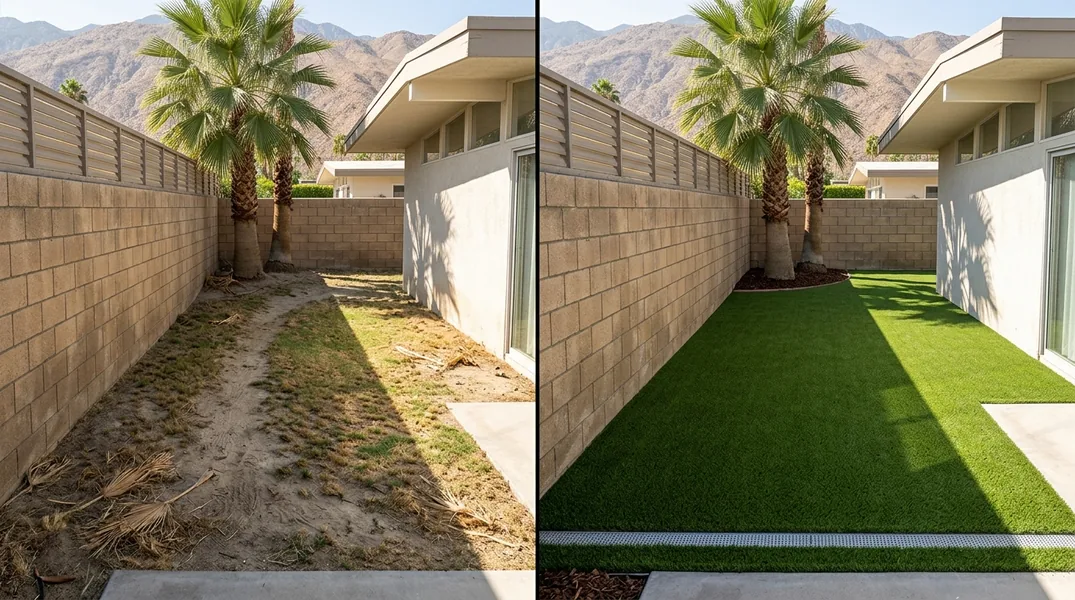
The Reality of Natural Grass in the Desert
Living in Palm Springs means embracing desert living, but maintaining a lush natural lawn in this climate presents challenges that many homeowners underestimate. The Coachella Valley's intense summer heat, low humidity, and limited water availability create an environment where traditional turf struggles to thrive. During peak summer months, temperatures regularly exceed 110 degrees Fahrenheit, and the sun's UV intensity can scorch even drought-tolerant grass varieties within weeks.
Natural grass in Palm Springs demands constant intervention. Most homeowners must irrigate daily during summer, sometimes twice daily, just to keep their lawns from turning brown and brittle. This level of watering consumes thousands of gallons monthly and drives up utility bills significantly. Beyond irrigation, natural grass requires regular fertilization, pest management, and frequent mowing during growing season. The combination of labor, water, chemicals, and equipment maintenance makes natural lawns an expensive and resource-intensive choice in a desert environment.
Summer Scorch and Winter Overseeding: The Costly Cycle
One of the most frustrating aspects of maintaining natural grass in the desert is the seasonal struggle that unfolds year after year. Cool-season grasses like fescue and bluegrass, which thrive in temperate climates, simply cannot handle the intense Palm Springs summer. These varieties go dormant or die off entirely when temperatures spike, leaving brown patches that spread across your lawn by mid-July. Many homeowners resort to warm-season grasses like Bermuda, but these have their own problems: they turn golden-brown during winter months, creating an unattractive appearance when you want your yard to look its best during the holiday season.
To combat this seasonal color loss, many Palm Springs residents practice winter overseeding, planting cool-season grass seed over dormant warm-season turf in October and November. This temporary solution requires additional water, fertilizer, and labor, and the results are often inconsistent. The newly seeded grass competes with the underlying dormant turf, and the intense spring sun can quickly stress these tender seedlings. By May, as temperatures rise, the cool-season overseeded grass dies back, and you're back to managing brown, dormant turf. This endless cycle of summer scorching and winter overseeding represents both a financial drain and an environmental concern in a region where water conservation matters.
Understanding Turf vs Artificial Grass: Key Differences
When comparing turf vs artificial grass, it's essential to look beyond surface-level aesthetics and examine the practical, financial, and environmental implications. Natural turf is a living organism that requires consistent care, water, nutrients, and pest management to survive. Artificial grass, by contrast, is a synthetic product engineered to mimic the appearance of real grass while eliminating most maintenance requirements. The fundamental difference lies in durability and resource consumption: natural grass demands ongoing inputs, while modern artificial turf offers a stable, low-maintenance alternative.
The artificial grass vs real grass debate often centers on appearance and feel. Today's premium artificial turf products look remarkably realistic, with varied blade colors, natural texture, and authentic density that rivals high-end natural lawns. The tactile experience has improved dramatically over the past decade. However, artificial grass does not photosynthesize or absorb water, which means it doesn't cool the landscape through evapotranspiration the way natural grass does. In exchange, it offers consistent year-round appearance, no brown patches, no seasonal dormancy, and zero chemical inputs. For homeowners prioritizing water conservation and reduced maintenance, artificial turf presents a compelling alternative to the traditional natural lawn cycle.
Xeriscaping and Drought-Tolerant Landscaping Strategies
Xeriscaping is a landscape design philosophy centered on water conservation, and it aligns perfectly with desert living in Cathedral City, Desert Hot Springs, and surrounding communities. Rather than fighting against the desert environment, xeriscaping embraces it by using drought-tolerant plants, hardscaping elements, and strategic turf placement. This approach reduces water consumption by up to 50 percent compared to traditional landscaping while creating visually appealing outdoor spaces that feel at home in an arid climate.
Drought-tolerant landscaping incorporates native desert plants like desert rose, lantana, and various succulents alongside mulch, gravel, and rock features. When turf is included in a xeriscape design, it's typically limited to functional areas like play zones or gathering spaces, rather than covering the entire yard. This is where Residential Artificial Grass Installation becomes a smart choice within a xeriscape plan. Artificial turf allows homeowners to maintain a green, usable lawn area without the water demands of natural grass, creating a hybrid landscape that conserves resources while preserving functionality and beauty. Many Palm Springs homeowners are discovering that combining artificial turf with native plantings and hardscaping elements delivers the best of both worlds: a beautiful, low-maintenance yard that respects the desert environment.
Cost Comparison: Natural Grass vs Artificial Turf Over Time
When evaluating the financial case for artificial grass, it's crucial to look at total cost of ownership over five, ten, and fifteen years rather than just upfront installation expense. The initial investment in Residential Artificial Grass Installation typically ranges higher than natural sod installation, but this comparison becomes misleading when you factor in ongoing maintenance costs. Natural grass demands weekly mowing during growing season (spring and summer), regular fertilization applications, pest and weed control treatments, irrigation system maintenance, and seasonal overseeding. For a typical residential yard in the Coachella Valley, these recurring expenses average 800 to 1,500 dollars annually.
Artificial turf requires minimal maintenance: occasional rinsing to remove dust, infrequent brushing to maintain blade texture, and periodic infill replacement (typically every 8 to 10 years). Annual maintenance costs for artificial turf usually fall between 100 and 300 dollars, and most of that is optional. Over a 10-year period, a homeowner maintaining natural grass might spend 12,000 to 20,000 dollars on care and water, while artificial turf maintenance costs remain under 3,000 dollars. When you add water bill savings (often 50 to 70 percent reduction), the financial advantage of artificial turf becomes substantial. For specific pricing on installation and to understand the exact ROI for your property, contact Palm Springs Artificial Grass Installation at (760) 548-3550 for a personalized assessment.
Making Your Decision: Which Option Is Right for Your Palm Springs Home
Choosing between natural grass and artificial turf ultimately depends on your priorities, lifestyle, and long-term vision for your outdoor space. If you value the environmental benefits of a living lawn, enjoy regular yard work, and have access to ample water resources, natural grass may suit your preferences. However, if you prioritize water conservation, minimal maintenance, consistent appearance, and long-term cost savings, artificial turf aligns better with desert living realities. Many homeowners in Rancho Mirage and surrounding areas are finding that artificial turf enhances their quality of life by eliminating the burden of constant lawn maintenance while supporting local water conservation efforts.
The decision becomes even clearer when you consider specific uses for your yard. If you have children or pets, Pet Turf and Dog Run Installation options provide a durable, clean, and safe surface that withstands heavy use far better than natural grass. If you're a golf enthusiast, Putting Green Installation offers a premium playing surface with consistent performance. For homeowners with pools, Pool Surround Turf provides a comfortable, non-slip surface that stays cool and requires no chemical treatment. Whatever your needs, the team at Palm Springs Artificial Grass Installation can help you evaluate your options. Contact us today at (760) 548-3550 or request a free estimate to explore how artificial turf can transform your outdoor space.
Looking for a professional artificial grass installation company in Palm Springs? Palm Springs Artificial Grass Installation responds fast for all your artificial grass installation needs.
Get a Free Quote